
Signs Your Furnace Is Failing in Topeka
For topeka, signs your furnace is failing include unusual noises like banging or rattling, uneven heating throughout your home. A sudden spike in energy bills. A furnace over 15–20 years old showing these symptoms warrants serious consideration of replacement before it fails completely during peak winter demand.
Failing furnaces display several clear warning signs: unusual banging or rattling noises, uneven heat distribution across rooms. A sharp rise in energy bills. Short cycling — where the furnace starts and stops repeatedly — signals serious trouble. Homeowners who spot these red flags benefit from prompt professional diagnosis before a full breakdown leaves them without heat.
Key Takeaways
- Furnaces that fail to maintain consistent temperatures or produce barely warm air require immediate replacement evaluation.
- Strange noises from your furnace indicate internal mechanical problems that signal the need for professional assessment.
- Frequent furnace repairs that consume significant time and money suggest replacement becomes more cost-effective than continued fixes.
- A furnace unable to heat your home on cold mornings demonstrates it has reached end-of-life status.
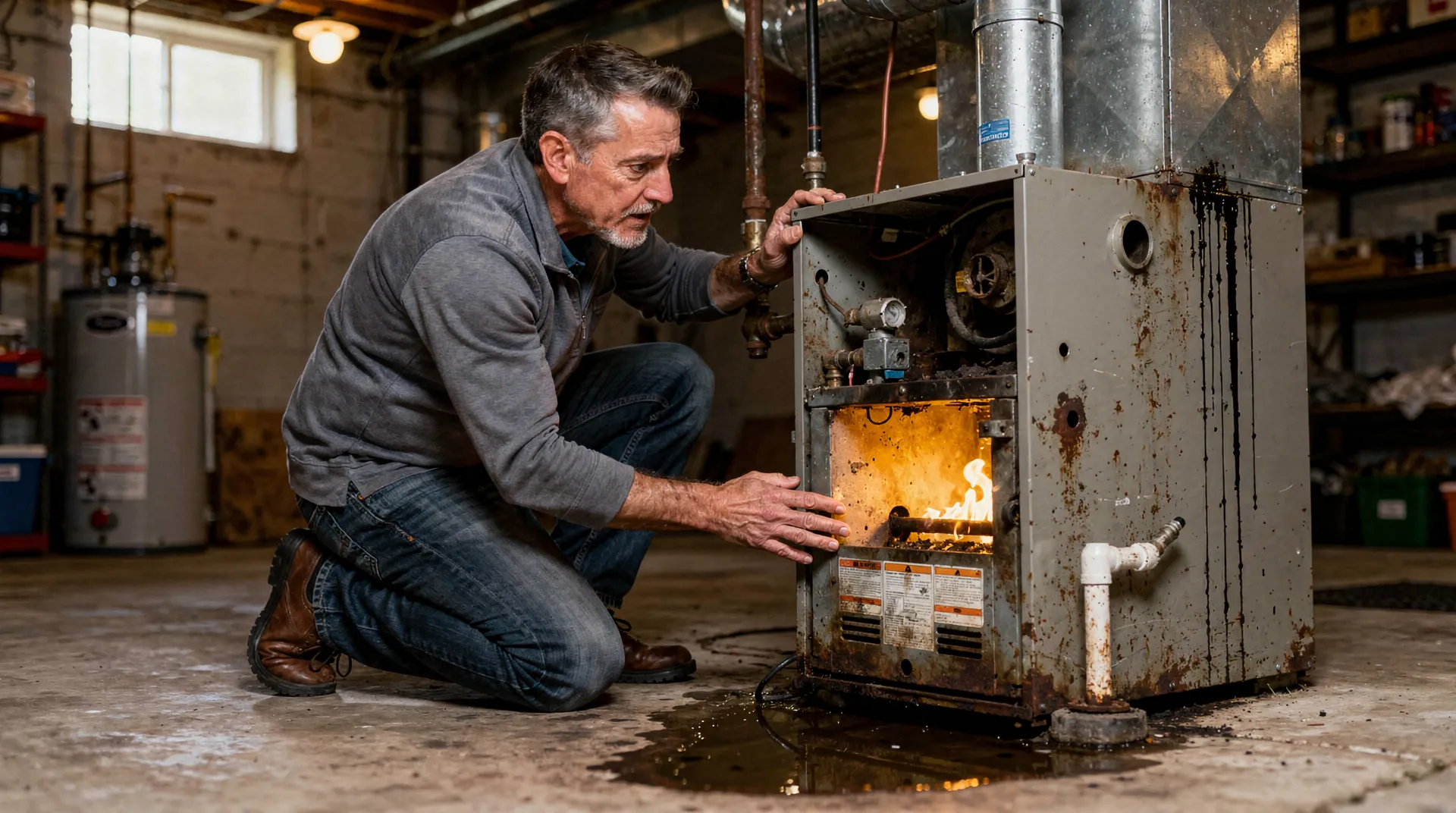
What are the most common signs a furnace is failing?
A failing furnace typically announces trouble through three core warning patterns: escalating repair costs, unusual mechanical noises. Uneven heating throughout the home. Homeowners in Topeka who recognize these signals early avoid the far costlier outcome of a complete mid-winter breakdown.
The most common failure signs include:
- Frequent and increasingly expensive repairs — when repair calls stack up season after season, the furnace is signaling the end of its useful life
- Strange mechanical noises — banging, rattling, or squealing sounds that were never present before indicate something is mechanically wrong inside the unit
- Inconsistent temperatures — rooms that swing between too hot and too cold, or that never reach the thermostat setting, point to a system struggling to perform
Why do repair costs keep climbing on an older furnace?
Furnace troubleshooting often reveals that aging components fail in sequence. Once one part wears out, neighboring parts compensate and wear faster. The result is a cycle of increasingly expensive service calls that signals the unit is nearing the end of its service life.
Why does a furnace make strange noises?
A properly functioning HVAC system runs quietly in the background. When unfamiliar sounds appear — banging, rattling, or persistent humming — the equipment is communicating a mechanical problem. Ignoring those sounds allows minor issues to escalate into major failures that affect the entire heating system.
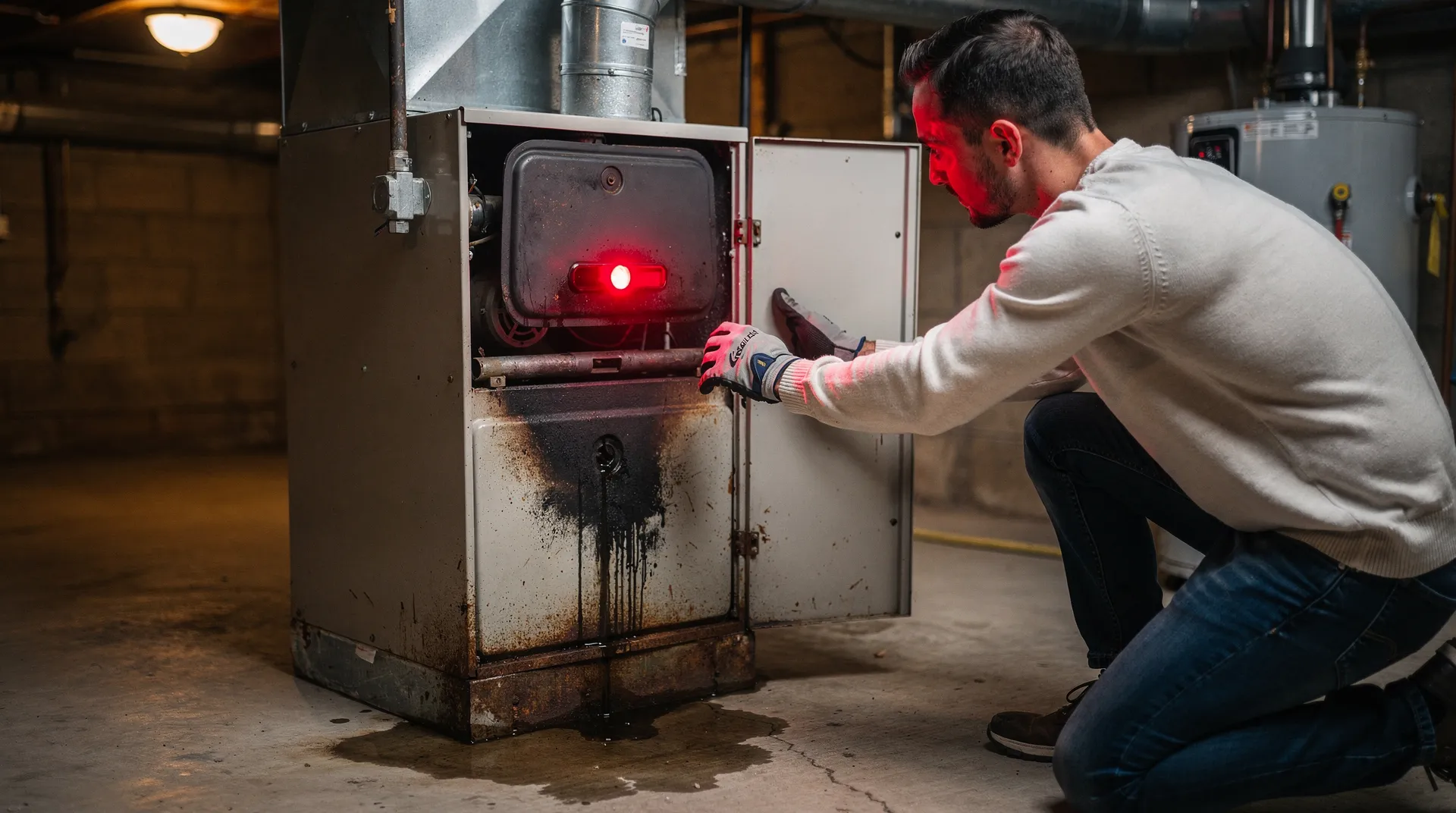
Which warning signs indicate your furnace needs urgent attention?
A furnace showing urgent warning signs typically produces air barely warmer than outdoor temperatures, requires repeated repairs. Runs constantly without heating the home. Homeowners in Topeka who recognize these signals early avoid emergency breakdowns and the steep costs that follow.
Furnace troubleshooting starts with observing how the system actually performs day to day. When a furnace struggles to deliver warm air — or the air from the vents feels closer to outdoor temperatures than indoor comfort — the heating system is signaling imminent failure. That is not a minor quirk. It points to a core mechanical problem.
What does it mean when a furnace needs constant repairs?
Frequent service calls are one of the clearest red flags in HVAC diagnostics. When a homeowner spends more time scheduling repairs than benefiting from consistent heat, the furnace has likely crossed from a repair situation into replacement territory. Each additional repair compounds the cost and the risk of a complete breakdown.
Why does catching furnace problems early matter?
Early detection is the difference between a manageable repair and a full emergency. Identifying problems before a furnace fails completely prevents uncomfortable nights without heat. Eliminates the premium costs that come with urgent, after-hours service calls.
Key warning signs to watch for:
- Air from vents that feels barely warmer than outdoor air
- Repairs needed more often than the furnace runs reliably
- A heating system that runs continuously but never reaches the set temperature
How should Topeka homeowners respond to furnace warning signs?
Topeka homeowners who notice furnace warning signs should act quickly — delayed responses turn minor repairs into full system failures. Furnace troubleshooting starts with documenting the problem: unusual noises, uneven heat, or short cycling all point to specific mechanical issues that a licensed HVAC technician can diagnose accurately.
What is the fastest way to get a furnace diagnosed?
Homeowners can text photos of the furnace issue directly to a local service provider for a faster diagnostic response. Visual evidence — a cracked heat exchanger, a tripped limit switch, a corroded burner. Helps technicians arrive prepared with the right parts and tools. This approach cuts diagnostic time significantly.
When does a furnace problem become an emergency?
A complete heating failure in winter qualifies as an emergency, especially for households with young children or elderly residents. BEST HVAC & Plumbing offers around-the-clock emergency service for exactly these situations.
Key response steps for homeowners:
- Document symptoms with photos before calling
- Note when the problem started and how often it occurs
- Contact a provider serving within a 25-mile radius of Topeka or Auburn for same-day availability
- Request upfront pricing that includes diagnostics and the first 30 minutes of service
Recognizing these warning signs protects your home's comfort and prevents costly emergency repairs. A failing furnace demands prompt professional attention to restore reliable heating and ensure your family stays warm through the season. Our licensed technicians diagnose furnace problems accurately and provide honest recommendations without pressure. You understand exactly what your system needs. Don't wait for a complete breakdown—reach out today for expert service you can trust.
FAQ
What noises indicate a furnace is failing?
Banging, rattling, or squealing sounds that were never present before signal a mechanical problem inside the unit and require professional assessment.
What happens when a furnace keeps needing repairs?
Aging components fail in sequence, causing neighboring parts to wear faster. Creating a cycle of increasingly expensive service calls that signals end of useful life.
When does a furnace need urgent attention?
A furnace producing air barely warmer than outdoor temperatures. Running constantly without heating the home, points to a core mechanical problem and imminent failure.