
Water Heater Maintenance Tips for Homeowners
Maximize the lifespan of your water heater and keep your energy bills low with these essential seasonal maintenance steps.
Your water heater works quietly year-round, and a little routine attention keeps it running efficiently and lasting longer. Flushing sediment from the tank, testing the temperature and pressure relief valve, checking the anode rod, and dialing in the thermostat all help prevent premature failure, lower energy bills, and reduce the risk of a cold-shower surprise. Most of these tasks take under an hour and need only basic tools.
A well-maintained tank water heater typically lasts 8 to 12 years, while tankless units can run 20 years or more with proper care. BEST HVAC & Plumbing, a family-owned, 5-star-rated provider serving Topeka, Auburn, and surrounding areas within a 25-mile radius, offers upfront pricing with diagnostics and the first 30 minutes included in every service call — so you always know what to expect before work begins.
Key Takeaways
- Flush your tank at least once a year to clear sediment that lowers efficiency and shortens the unit's lifespan.
- Test the temperature and pressure relief (T&P) valve annually to confirm this critical safety component still works.
- Set the thermostat to 120°F to balance energy savings, scald protection, and reliable hot water.
- Inspect the anode rod every two to three years and replace it once heavily corroded to protect the tank from rust.
What Do You Need Before You Start?
Water heater maintenance starts with a few basic tools and a clear safety sequence. Gathering supplies and shutting the unit down properly before you begin prevents burns, water damage, and wasted time.
Prerequisite: Turn off power to an electric heater at the breaker, or set a gas heater's control to "pilot" before draining. Then close the cold-water supply valve at the top of the tank.
- Gather supplies. Collect a garden hose, a bucket, a flathead screwdriver, work gloves, and a replacement anode rod if yours is due.
- Identify your unit. Note whether the heater is gas or electric, tank or tankless, and locate the model and serial number for reference.
- Let the water cool. Give the tank one to two hours after shutting off the heat source so drained water is not scalding.
- Clear the area. Move stored items away from the heater to allow safe access and to spot any leaks or corrosion.
Why does turning off the power or gas matter first?
Draining a tank while it is still heating can damage the heating elements or burner and expose you to scalding water. Shutting off the energy source and letting the water cool makes the whole process safer and protects the unit.
How do homeowners know which maintenance their heater needs?
The right tasks depend on the unit's age, type, and local water quality — Topeka's harder water, for example, speeds up sediment buildup. Homeowners can text photos of the heater, its label, and any problem areas to BEST HVAC & Plumbing for a faster, better-prepared diagnosis.
Core Water Heater Maintenance Steps
Core maintenance addresses sediment, safety valves, corrosion protection, and efficiency — the four areas that most affect how long your water heater lasts and how much it costs to run. Complete these steps in order, and stop and call a professional if anything looks unsafe.
Prerequisite: Confirm the power or gas and the cold-water supply are off, and keep a bucket and towels nearby to catch drips.
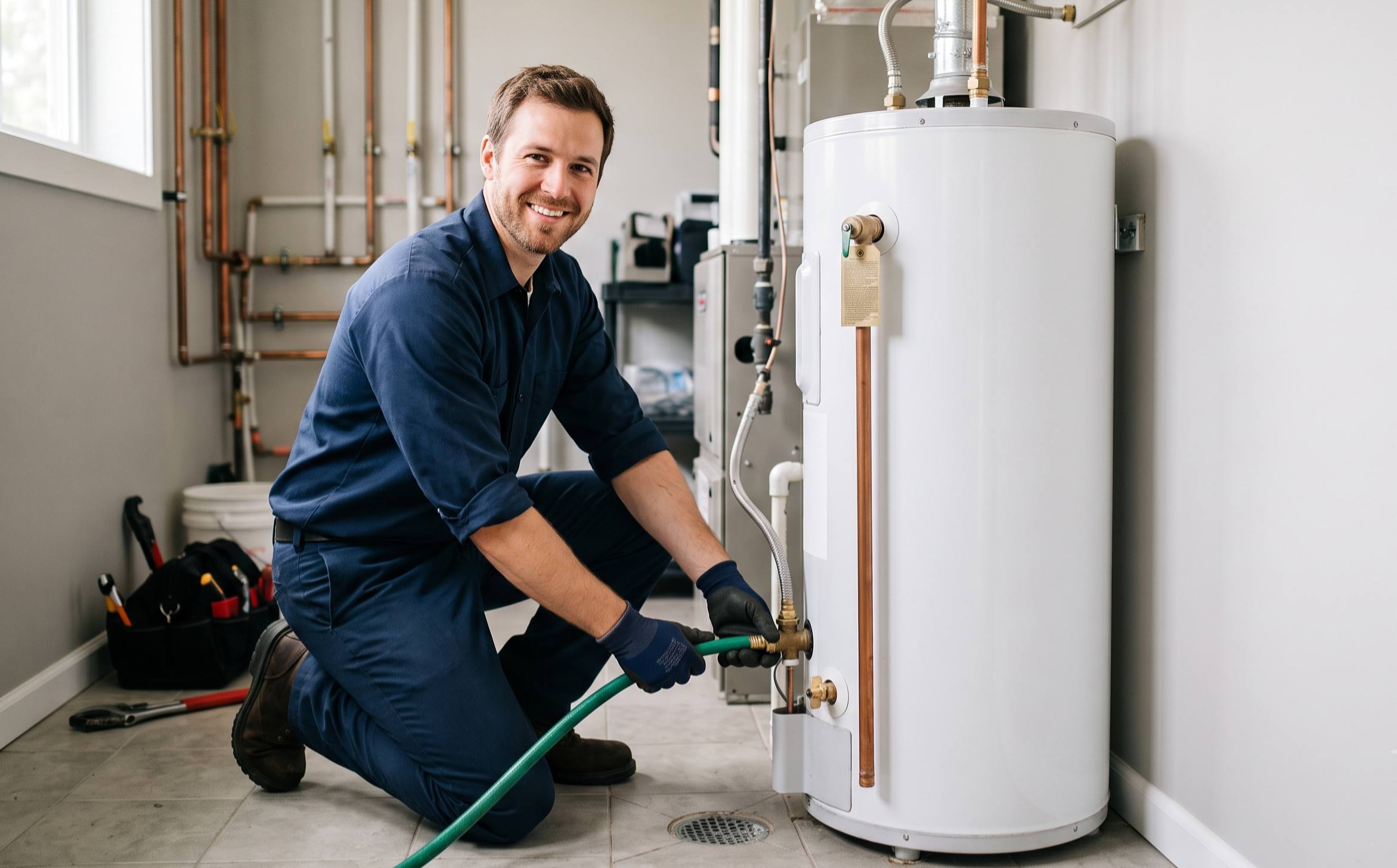
- Flush the tank to remove sediment. Attach a hose to the drain valve, run it to a floor drain or outside, open the valve, and let the tank empty. Sediment that settles at the bottom insulates the burner, wastes energy, and can cause popping noises and early failure.
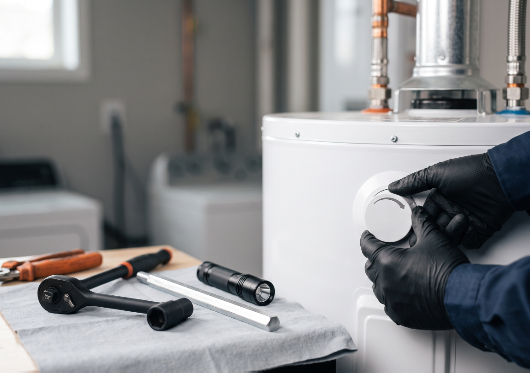
- Test the temperature and pressure relief valve. Place a bucket under the discharge pipe, lift the valve's lever briefly, and let some water release. If it does not flow, or does not reseat and stop afterward, the valve needs replacement.
- Inspect the anode rod. Unscrew the rod from the top of the tank and check it. If it is heavily corroded or worn to less than half its original thickness, replace it to keep the tank itself from rusting.
- Set the thermostat to 120°F. This temperature protects against scalding, limits mineral buildup, and can noticeably lower energy costs compared with a factory default of 140°F.
- Insulate the tank and hot-water pipes. Add an insulating blanket to an older tank and foam sleeves to exposed hot-water lines to cut standby heat loss — especially valuable during colder months.
- Check for leaks and corrosion. Inspect the base, fittings, and connections for moisture, rust, or mineral trails. Catching a small leak early prevents water damage and gives you time to plan a replacement.
How often should each step be done?
Flush the tank and test the T&P valve at least once a year, and twice a year if you have hard water. Check the anode rod every two to three years, and confirm the thermostat setting and insulation each fall before heavy winter use.
Does a tankless water heater need different care?
Tankless units do not collect sediment the same way, but they still need an annual descaling flush to clear mineral scale from the heat exchanger, plus a cleaning of the inlet water filter. Skipping this leads to reduced flow, error codes, and higher energy use.
When Should You Call a Licensed Professional?
Routine maintenance handles most upkeep, but some situations call for a licensed technician. Gas connections, faulty safety valves, and internal tank corrosion fall outside the scope of DIY care.
Treat these signs as clear triggers for professional service:
- Water pooling around the base of the tank, or rust-colored hot water
- A T&P valve that leaks constantly or fails to reseat after testing
- Not enough hot water, water that never gets hot, or wide temperature swings
- Popping, rumbling, or knocking sounds that persist after a flush
- The smell of gas near a gas water heater, or a pilot light that will not stay lit
What counts as a water heater emergency?
A major leak, the smell of gas, or a tank that has stopped producing hot water in freezing weather all qualify as emergencies. BEST HVAC & Plumbing offers same-day, next-day, and 24/7 emergency service for single-family homes and small commercial buildings throughout the Topeka area. For a suspected gas leak, leave the home and call your gas utility first.
What should homeowners expect when a technician arrives?
BEST HVAC & Plumbing is fully licensed and insured and holds a 5-star rating on Google Reviews. Every visit comes with upfront pricing — diagnostics and the first 30 minutes of service are included in the service call fee, with no surprise charges — so you can make a confident decision about repair or replacement.
A few simple habits go a long way: flush the tank, test the safety valve, watch the anode rod, and keep the thermostat at 120°F. Seasonal water heater maintenance protects your investment, keeps energy bills in check, and helps you avoid cold showers and emergency calls when you least expect them. Stay proactive, and your water heater will reward you with years of dependable hot water.
FAQ
How often should I flush my water heater?
Flush a tank water heater at least once a year, or every six months if your home has hard water, to clear sediment that lowers efficiency and shortens the tank's lifespan.
What temperature should my water heater be set to?
120°F is the recommended setting. It protects against scalding, slows mineral and bacterial buildup, and usually costs less to run than the factory default.
How long does a water heater last?
A well-maintained tank water heater usually lasts 8 to 12 years, while a tankless unit can last 20 years or more. Regular maintenance and timely anode rod replacement help you reach the higher end of that range.